

Write sophisticated chord progressions
With Mindful Harmony, a web app for composers and songwriters.
Join 10,000+ other
composers & songwriters
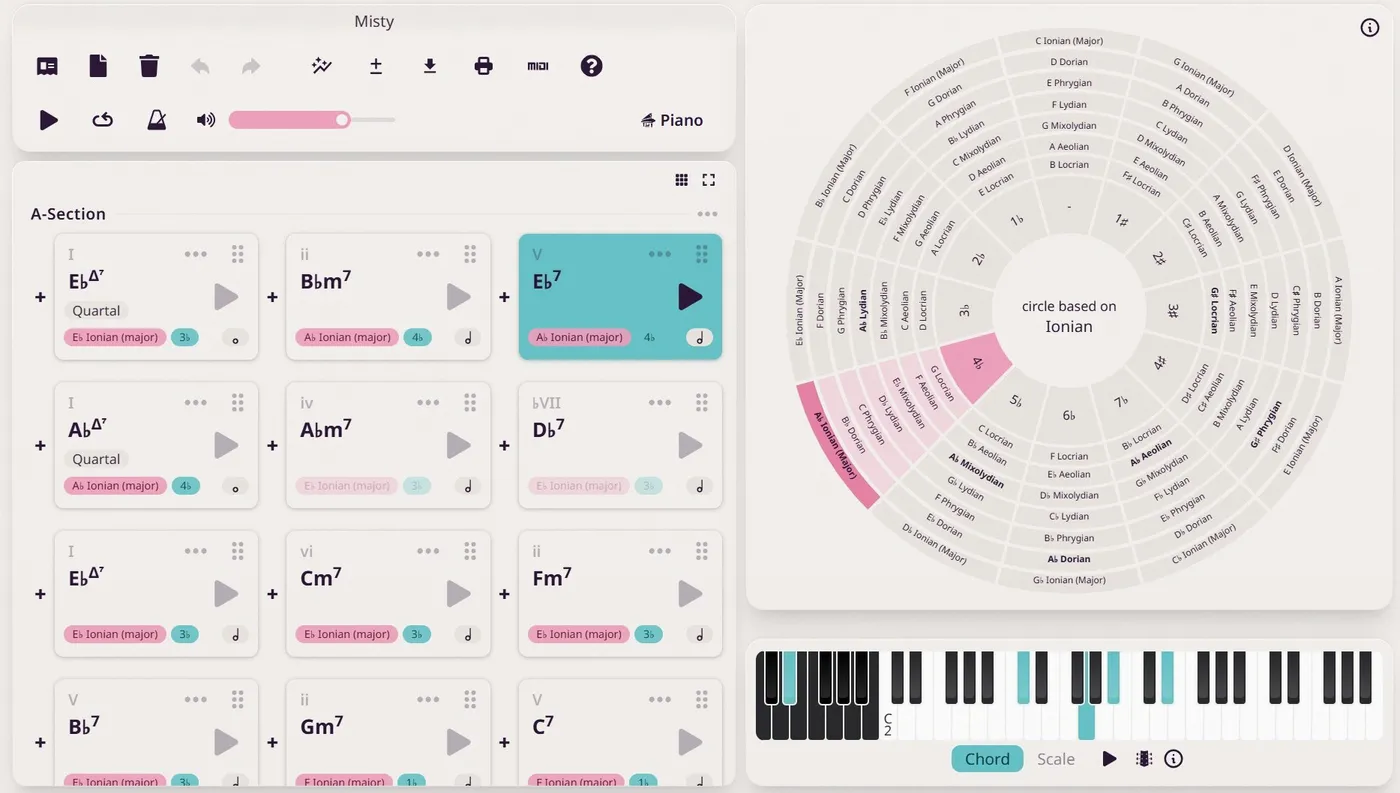
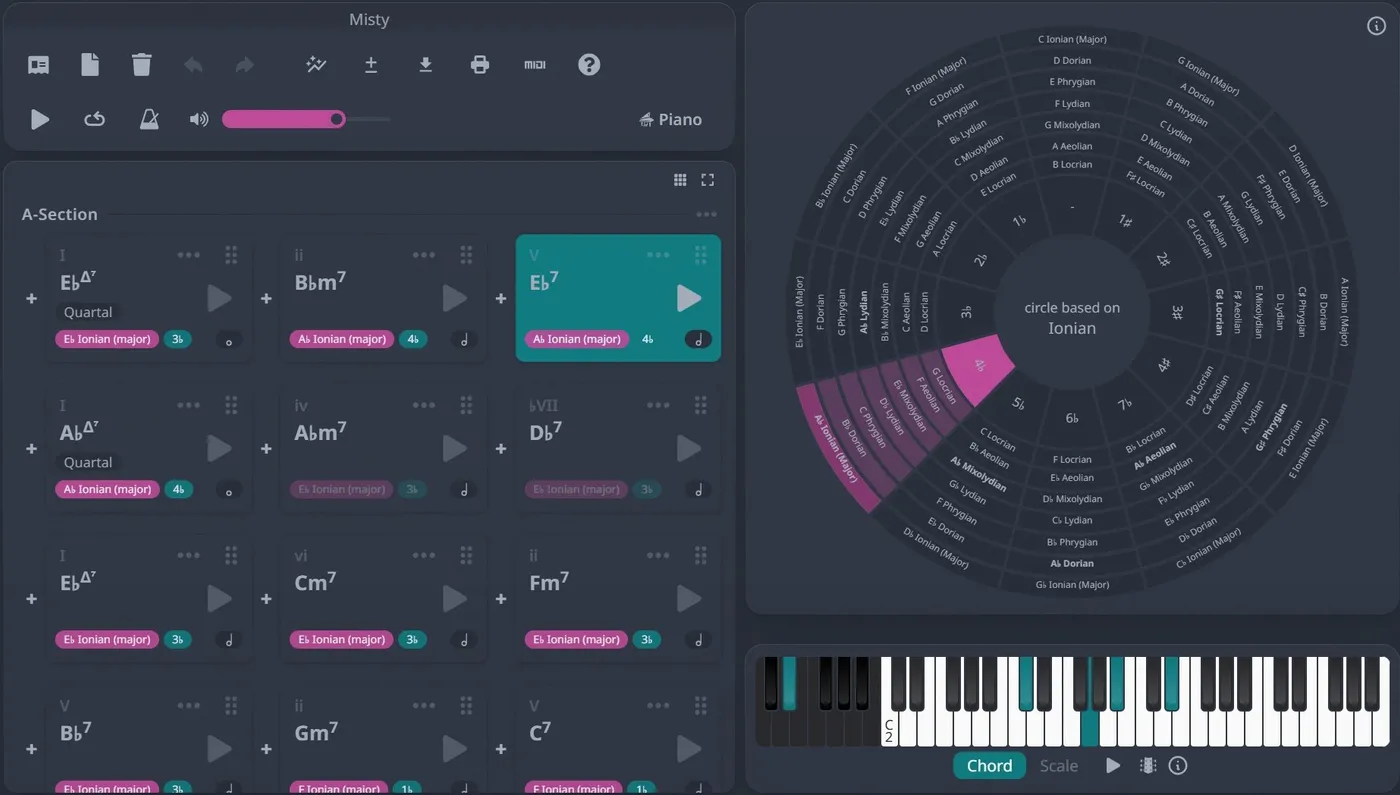
Write chord progressions in your browser
$99.99 USD
lifetime
Easily create chord progressions
using advanced harmonic concepts
Chord progression with modal interchange
I
♭III
ii
♭VII
Make sure your device isn't muted.
Write better music
Compose beautiful music while learning the principles that make it work.
Find chords that fit
Get access to diatonic chords in every key and mode.
Find chords that vibe
Advanced music theory concepts such as modal interchange and tonicization at your fingertips.
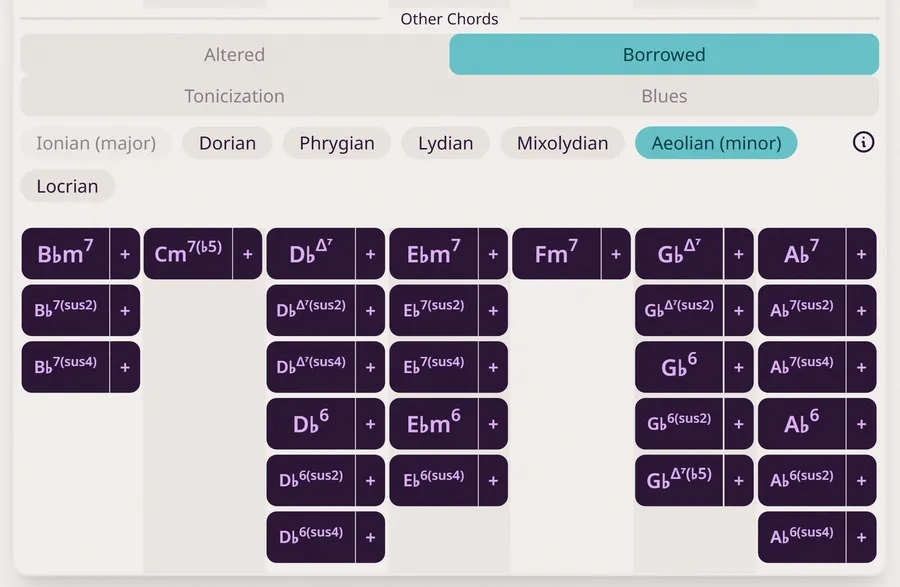
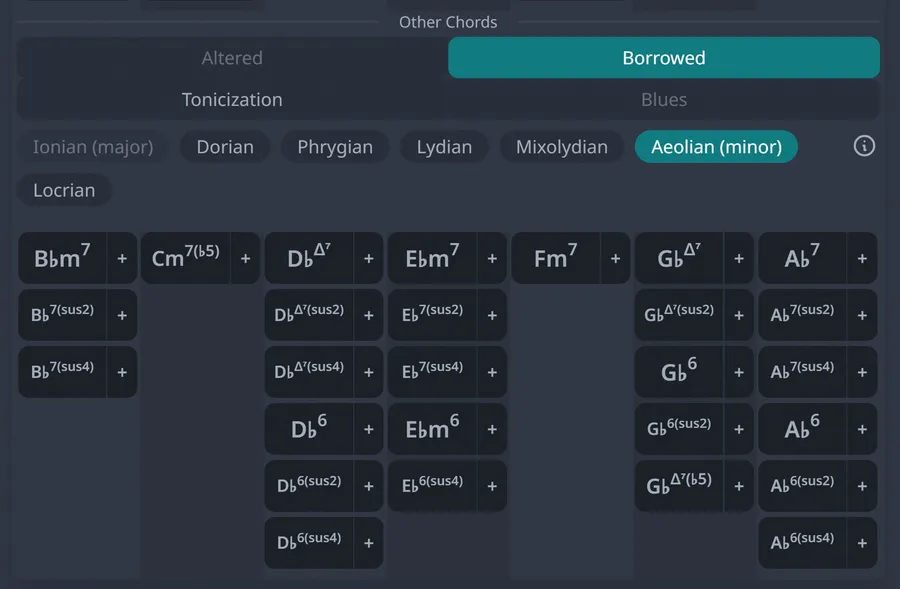
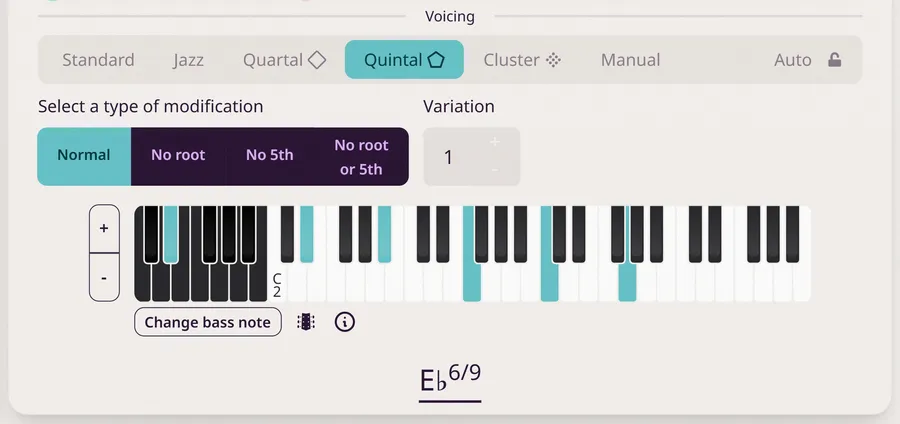
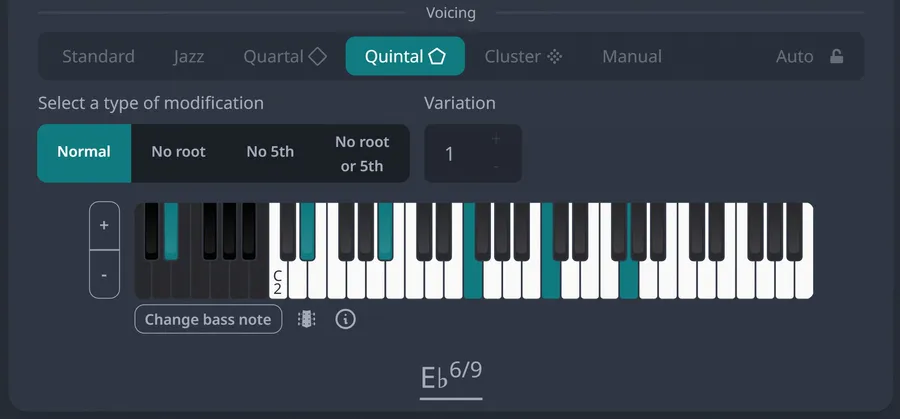
Find beautiful voicings
Choose from an array of professional chord voicings.
Go deep on voice leading
Connect your chords in meaningful ways.
Analyze your harmony
See the relationships behind the music you're writing.
The circle of fifths
See how chord progressions move around the circle of fifths.
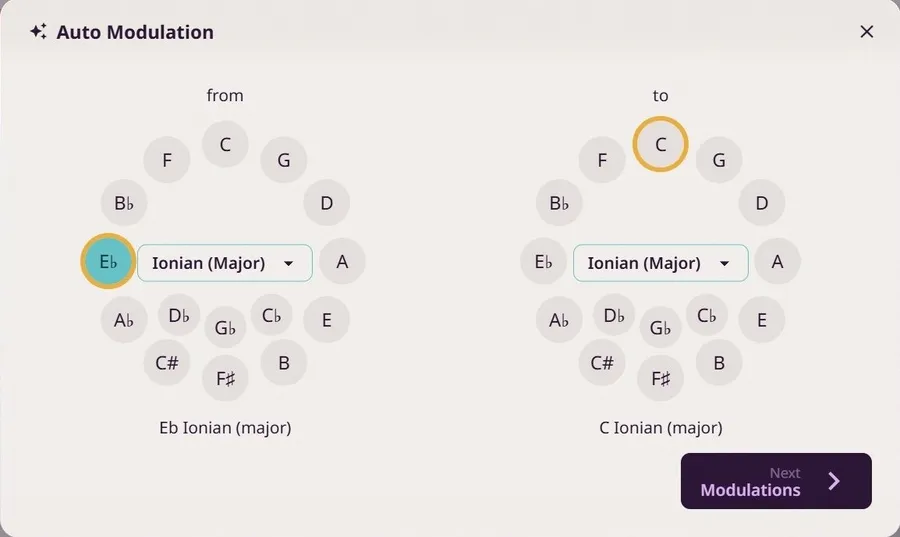
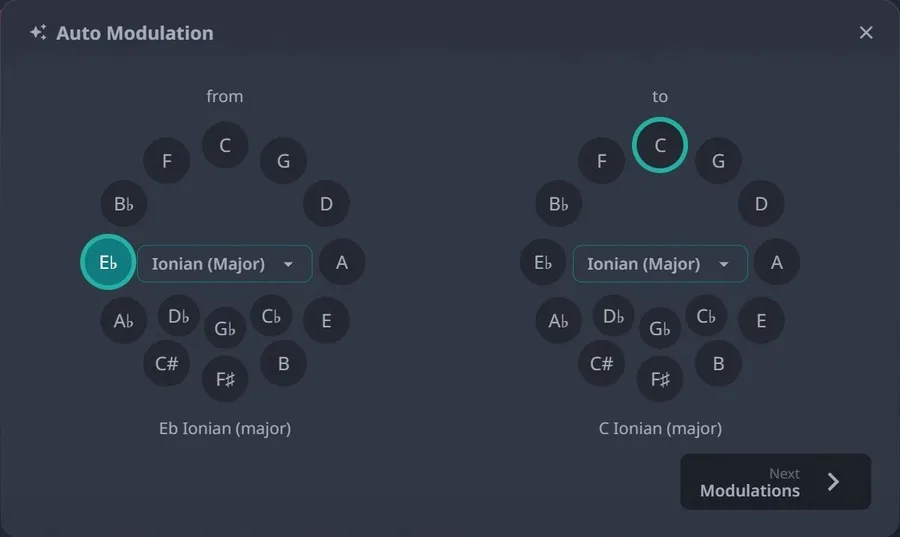
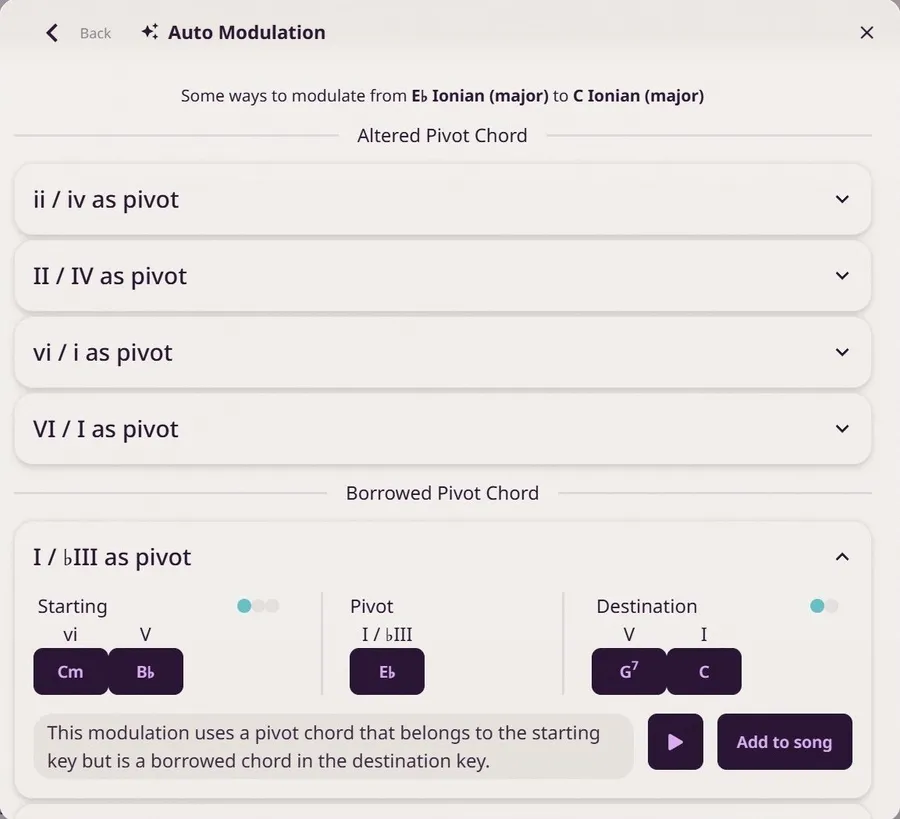
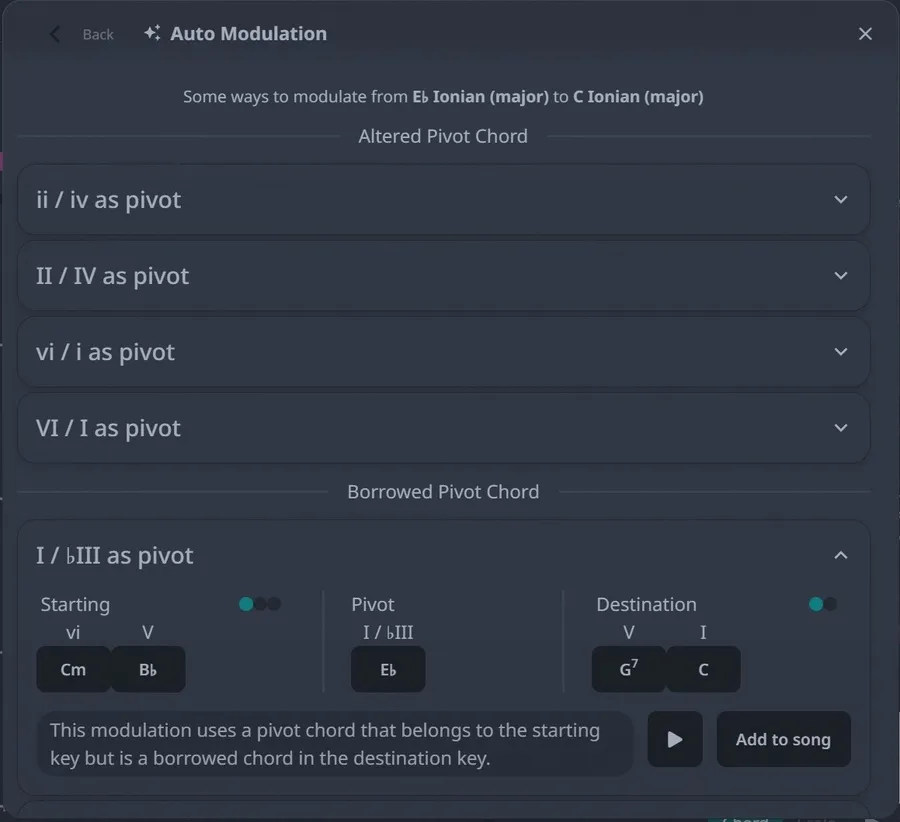
Modulate more
Find pivot chords for smooth modulations between keys.
Discover new ideas
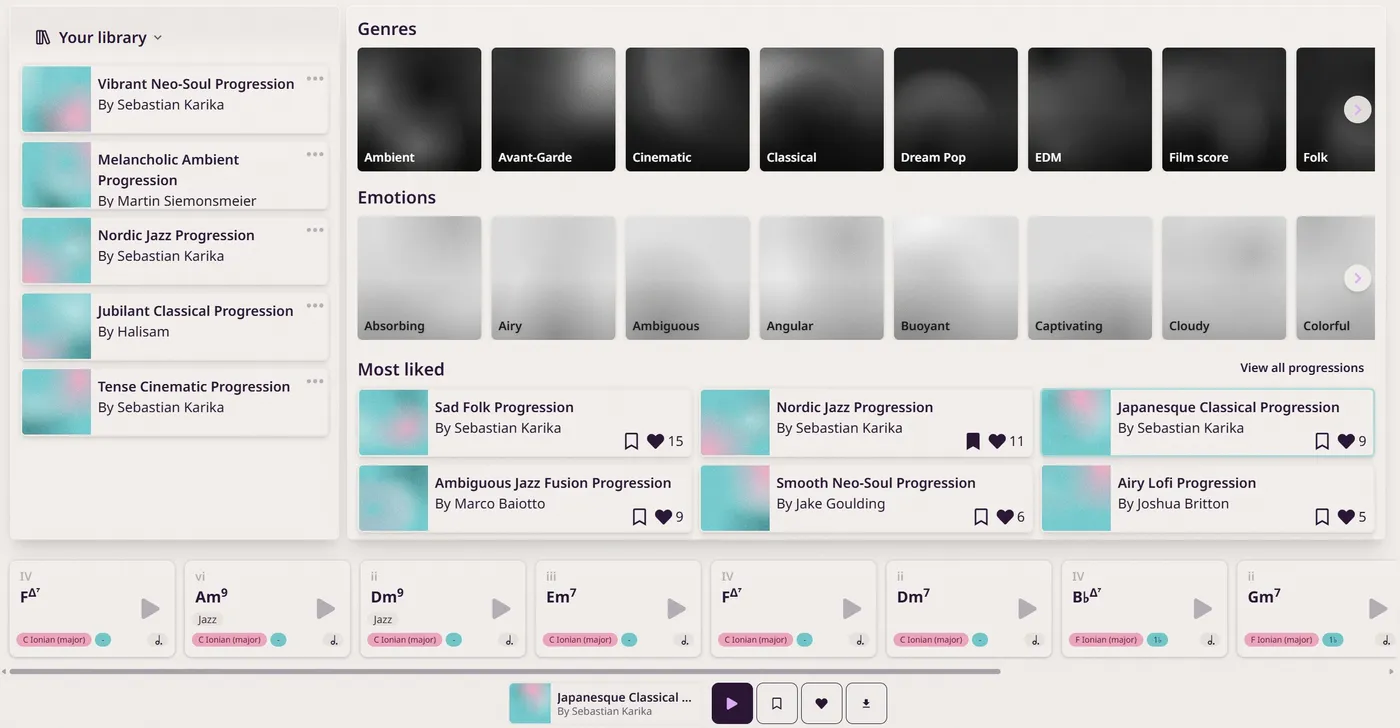
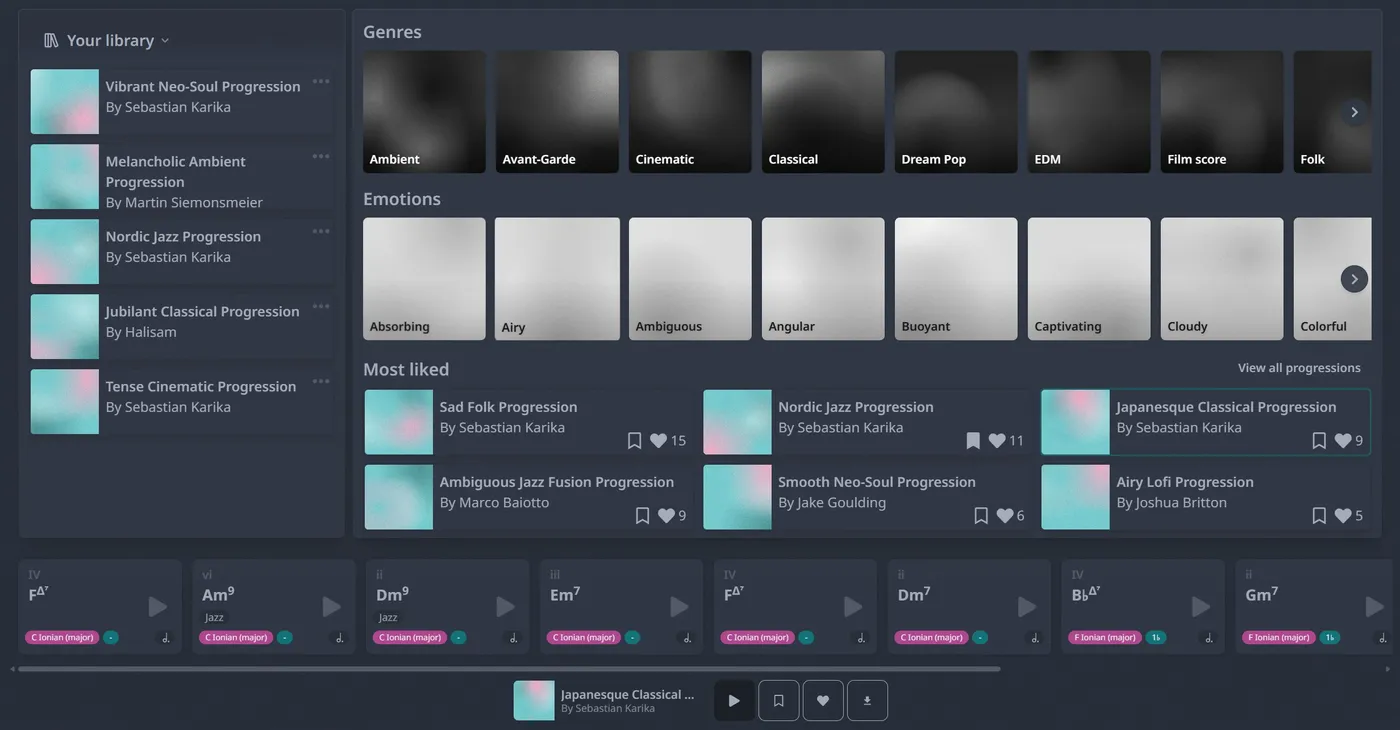
Stay inspired by what other composers and songwriters are working on.
Share with the community
Browse progressions, save the ones you love, and put your own work in front of other musicians.
What our users say
Mattias
Rated 5 out of 5
Great app! I don't know enough music theory to see all the harmonic connections so it helps a lot to try different possibilities and listen. And learn more at the same time.
Alex
Rated 5 out of 5
An essential tool to discover harmonies and chord progressions that otherwise would remain hidden if you are not versed in music theory. To truly express yourself in your music, by going further from the archetypical harmonies, there's no better tool to tryout.
Chase S
Rated 5 out of 5
Awesome learning app with emphasis on voice leading and a lot more user friendly than scaler 3
More reviews

Edward Leaker
Head of Woodwind Head of Jazz & Popular Music, Wells Cathedral School
Rated 5 out of 5
For an instrumental teacher and musician such as myself, this will complement my other carefully selected practice apps. I would recommend this to beginners and seasoned professionals alike.
Andre Yamaguti
Rated 5 out of 5
Mindful Harmony is the best tool I've ever used for developing compositions, studying functional harmony structures, and improving my musical skills. Perfect for all types of musicians, it provides easy and intuitive access to everything from complex harmonies and their fundamentals to harmonic experiments. It's ready in just a few minutes, with all the complexities and structures easily understood visually. This app deserves to be recognized as incredible, and congratulations to the developers—a must-have masterpiece.
Steve K
Rated 5 out of 5
Over the years, I have tried most of the available tools for constructing MIDI chord progressions. They all seem to have their pros and cons, but I think Mindful Harmony is the best so far, in terms of the ease of use, and the quality of the result. It is brilliant for exploring non-diatonic options when putting a chord progression together (an area where many other tools struggle).

Seth Geltman
GT Teacher, Cherry Creek Academy
Rated 5 out of 5
Our kids are getting a lot out of Mindful Harmony. It's a great opportunity for them to explore sound in ways they haven't been able to before. It's also provided a great way to discuss the characters of different modes (e.g., Lydian's bright sound; Locrian's dark). Having the sounds and names so readily accessible has a way of demystifying this sometimes cryptic area of music.
James
Rated 5 out of 5
This is by far the most innovative way to learn music theory. Fully hands-on you combine your creative skills with the skills of music theory you learn on this platform. This should be an academic tools for teaching music theory to any institutions that offer music classes or music degrees.
Franklin Lunsford
Rated 5 out of 5
Mindful Harmony makes it easy to set up a sophisticated chord progression. The format is very flexible, and editing is easy to do. And there are so many chord varieties. I can then save the result as a MIDI file and use it in Ableton Live to drive a virtual instrument.
Unlock Your Creative Potential
Lifetime
Make it part of your music-writing ritual
$99.99 USDNo subscriptionUnlimited access30-day money back guarantee
Teacher or student? Contact us for an educational discount.
Chord progression tools should guide your creativity, not replace it.
Writing with other tools
Generate random chords
Skip learning why they work
Rely on the tool for every idea
Surrender creative control
Writing with Mindful Harmony
See the theory behind each choice
Understand why chords sound good
Build musical instincts you'll use even without the app
Stay in full creative control
Frequently asked questions
Why not just buy a MIDI pack of chord progressions?
While MIDI packs can provide ready-made chord progressions, Mindful Harmony empowers you to truly understand the music theory behind the harmonies. By exploring the app's interactive features and experimenting with advanced concepts, you'll develop a deeper, more nuanced command of chord progressions. This not only makes your music more meaningful and expressive, but also unlocks your ability to craft truly original, personalized compositions.
Why music theory?
Mindful Harmony gives you the music theory knowledge to take full control over your creative vision. Understand harmony on a deeper level, and unlock the ability to craft compositions that resonate with intention and emotional impact. Music theory expands your creative vocabulary, empowering you to explore new directions and bring your artistic ideas to life.
Why a web app?
Mindful Harmony syncs your compositions to the cloud, enabling you to capture inspiration on the go and continue refining your work from any device. Your creative flow never has to be interrupted.
How do you use the circle of fifths?
The circle of fifths is a visual representation of the relationships between scales, arranged in a circle. It can help you to make mindful decisions on the harmonic content of your songs.
At the top of the circle is the C Major scale, also called C Ionian. Going clockwise, each step in the circle is a fifth interval apart from the previous step. The second step, thus, is G major, as G is a fifth away from C.
For each step clockwise, one sharp is added to the key. In C Major there are no sharps, but in G Major there is one sharp. And if we go one more step clockwise to D Major we find two sharps.
If instead, we go one step counter-clockwise from C to F Major, we will find one flat. And if we go one more step to Bb Major we find two flats. Going clockwise in the circle of fifths adds sharps. Going counter-clockwise adds flats.
The further away two scales are from each other, the fewer notes they have in common and the greater the effect will be when modulating between them. That's how the circle of fifths can help us understand the effects of a certain modulation.
Mindful Harmony features an interactive circle of fifths chart with modes. This helps visualize the relationships between scales and modes. Understanding modal modulation has never been more intuitive.
What scales are featured in Mindful Harmony?
Mindful Harmony features every scale that is a mode of the Major (Ionian) scale: Ionian (Major), Dorian, Phrygian, Lydian, Mixolydian, Aeolian (Minor), and Locrian.
It also features the scales that are modes of the Harmonic Minor and the Melodic Minor scales.
The modes of Harmonic Minor are Harmonic Minor, Locrian ♯6, Ionian ♯5, Dorian ♯4, Phrygian Major, Lydian ♯2, and Altered Diminished.
The modes of Melodic Minor are Melodic Minor, Dorian ♭2, Lydian Augmented, Lydian Dominant, Mixolydian ♭6, Locrian ♮2, and Super Locrian.
This means that you can easily write beautiful major chord progressions, minor chord progressions, and modal chord progressions.
What are borrowed chords?
Borrowed chords are a great way to add color to your chord progressions. They are sometimes called modal interchange, mode mixture, modal mixture, substituted chord, or mutation.
If you are writing a progression in C major, you might borrow chords from another mode with C as the root.
One such mode is C aeolian or C minor. It's got chords like Eb, Ab, and Bb, which you can borrow to your chord progression in C major to make it more interesting.
You can also borrow chords from every other mode, Dorian, Phrygian, Lydian, Mixolydian, and Locrian.
Mindful Harmony makes it easy to find chords for modal interchange, as well as common altered chords, dominant chords, and secondary dominant chords.
Is Mindful Harmony available as a VST plugin?
Not yet, but we're working on something.
Was Mindful Harmony vibe-coded?
No. Mindful Harmony has been built and iterated on since 2023, with continuous feedback from our users. Most of the code is hand-written, and I've put countless hours into it. I recently started using AI-assisted coding tools to develop and ship new features faster and more efficiently, as much of the industry is doing today. However, my stance on AI is that it should only be used to improve efficiency. Research and creativity should always be done by a human.
Is guitar tablature supported?
Yes. Mindful Harmony includes a guitar fretboard view so you can see how chords map to the guitar. The app is piano-first, though. Guitar voicings are a direct translation of the piano voicing when possible. They may not always be best practice to play on guitar, and some piano voicings may not translate well.
Do you offer educational licenses?
Mindful Harmony is an appreciated asset in music theory and song-writing classes. Schools can get accounts for their teachers and students at a discounted bulk price. If you are a teacher or a school representative, please contact us.
Photo attributions
Man at the piano: Dolo Iglesias via Unsplash
Orchestra: Pencari Angin via Unsplash